News
Boeing and Carbonfuture Sign Multi-Year Agreement for at least 40,000 Tonnes of Durable Carbon Removal
Boeing and Carbonfuture Sign Multi-Year Agreement for at least 40,000 Tonnes of Durable Carbon Removal
Learn More



1982
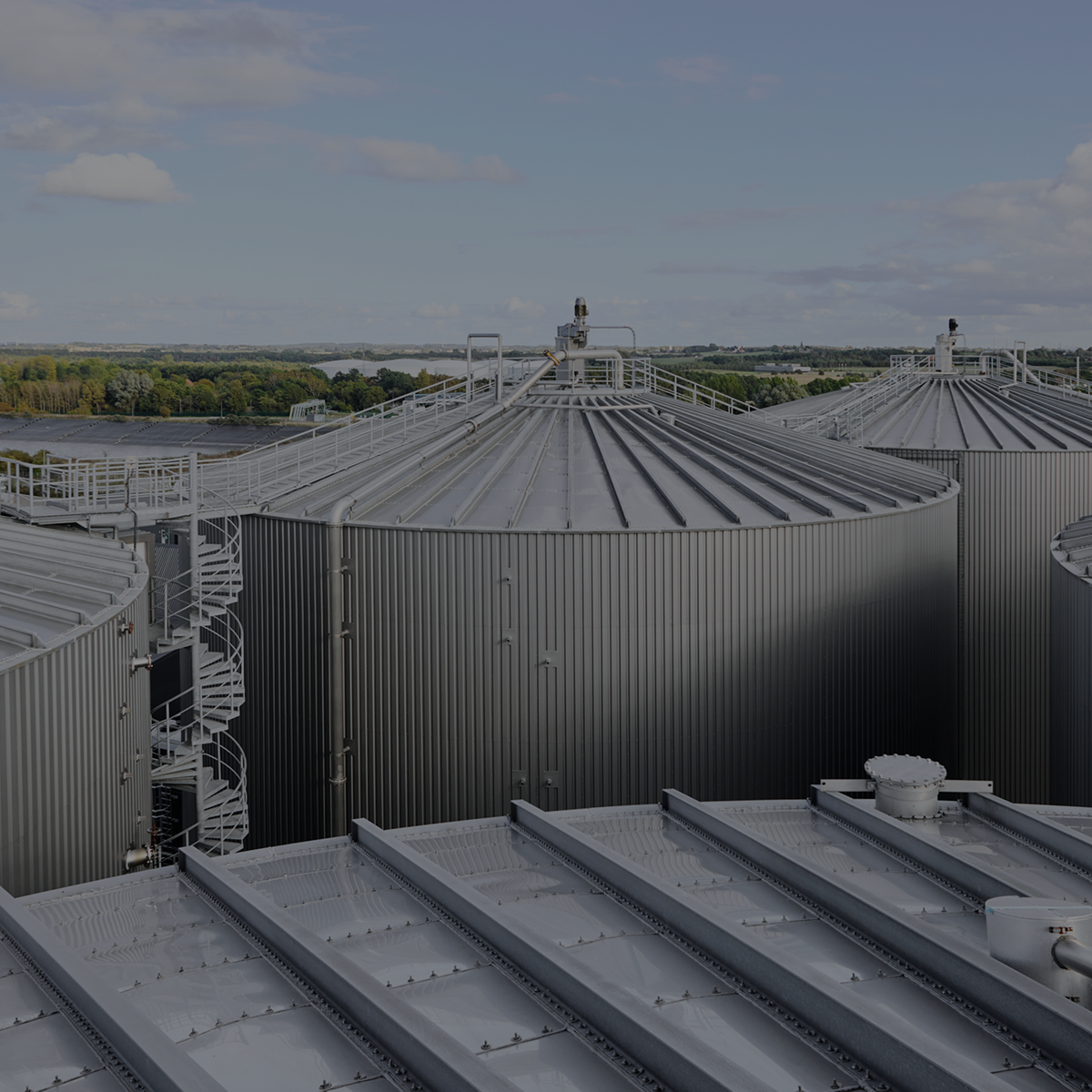
Nine biogas facilities in Denmark and one in Germany. Kalundborg Bioenergi operates a CO₂ liquefaction facility as part of its BECCS value chain.
Approximately 190 employees
Bioenergy with Carbon Capture and Storage (BECCS)
Capturing up to 200,000 tonnes of biogenic CO₂ annually by 2030
Skanderborg, Denmark
Danish biogas producer Bigadan has been making gas from farm and food wastes for over 40 years. When these wastes are broken down in its anaerobic digestion plants, they release biomethane, used as clean energy, and carbon dioxide as a byproduct. This means the company had the technology, operational experience, and access to biogenic CO₂ needed to deliver durable carbon removal at scale. The challenge was to build the market knowledge and a commercial model to navigate a developing carbon dioxide removal (CDR) market, demonstrate project quality, and connect with companies seeking credible carbon removal credits.
Combining Bigadan's traceability infrastructure and operational knowledge with Carbonfuture's carbon removal expertise, platform, and market knowledge, the collaboration has created a clear and transparent route to market. This gives buyers confidence in the quality, traceability, and delivery of Bigadan's carbon removals while reducing the burden of conducting independent project assessments.
Bigadan’s BECCS project in Kalundborg, Denmark, captures and liquefies biogenic CO₂ and transports it to the designated storage site, Project Greensand, an old oil field. From there, INEOS, the storage operator, transports the CO₂ for permanent geological storage beneath the North Sea, where fossil fuels were once trapped for millions of years. The BECCS project builds on more than four decades of Bigadan developing and operating biogas plants.
Bigadan’s portfolio of biogas facilities provides a strong foundation for BECCS. Carbon capture and liquefaction can be integrated with existing biogas infrastructure, enabling the company to scale from an established operational base rather than build an entirely new value chain from scratch.
The Kalundborg facility has been operational since May 2026 and is expected to capture approximately 27,000 tonnes of biogenic CO₂ annually from the processing of agricultural and industrial residues. Bigadan has expanded its carbon capture and liquefaction with another facility in Herning. Across its facilities, the company aims to capture up to 200,000 tonnes of CO₂ annually by 2030.
The project is supported by Denmark’s fund for negative CO₂ emissions, the Negative Emissions Carbon Capture and Storage (NECCS) scheme, which awarded funding for the permanent storage of 25,000 tonnes of biogenic CO₂ per year from 2026 to 2032. This provides a foundation for early operations while Bigadan develops a broader commercial market for high-quality carbon removals.
Turning strong technical and operational credentials into market demand, however, requires more than a functioning value chain.
“When we entered the carbon credit and CDR market, we did not yet know how the market would develop. Our initial strategy was to approach end buyers and sell the credits directly.”, said Trine Friis Bendixen, Sustainability & Portfolio Manager at Bigadan.
Early buyer conversations highlighted several market barriers. Carbon removal pricing remains difficult for many companies to assess, while past shortcomings in parts of the voluntary carbon market have increased scrutiny of project quality and delivery risk. Many prospective buyers support carbon removal in principle but need robust documentation, traceability, and independent assurance before committing capital.
Due diligence also requires specialist knowledge and significant internal resources. Many companies do not have the capacity to evaluate carbon removal projects fully in-house, increasing the importance of trusted intermediaries, like Carbonfuture that can assess suppliers, structure transactions, and provide transparent monitoring and documentation.
“Intermediaries such as Carbonfuture play an important role in this developing market. They help create greater security and trust in a sector that has historically lacked consistent standards and transparency.”

To address these barriers, Bigadan partnered with Carbonfuture for support with market access and the facilitation of qualified buyer relationships.
“Intermediaries such as Carbonfuture play an important role in this developing market. They help create greater security and trust in a sector that has historically lacked consistent standards and transparency.”, said Trine Friis Bendixen, Sustainability & Portfolio Manager at Bigadan.
Bigadan selected Carbonfuture as one of its partners based on the team’s flexibility, openness, and collaborative approach: “Where some intermediaries defined the structure and framework from the outset, Carbonfuture approached the collaboration as a dialogue. The team was willing to understand what made sense for us and to find workable compromises.”
Carbonfuture’s buyer network and digital Trust Infrastructure, designed to support transparency and traceability across the carbon removal lifecycle, further strengthened the collaboration.
Bigadan had established the operational BECCS value chain. The remaining task was to convert technical credibility into buyer confidence and long-term demand. Carbonfuture and Bigadan ran a reverse tender, inviting corporate buyers to express interest in the project. This led to direct discussions with buyers actively evaluating carbon removal opportunities and provided a basis for Bigadan and Carbonfuture to develop the partnerships further.
One of these discussions was with The Economist Group, which has set a target to reduce its corporate emissions by 43% by 2030. Its longer-term ambition is to achieve science-based net zero by 2045. Recognizing that some residual emissions will remain, the company engaged Carbonfuture to support its carbon removal strategy.
“We know the best way to progress towards net zero is to keep reducing emissions,” Emily Jackson-Kessler, SVP of Sustainability at The Economist Group, said of the Group’s strategy in an interview last year. “But how can we address unavoidable emissions in a way that is not only credible, but also deeply embedded in our company culture?”
Jackson-Kessler was already familiar with Carbonfuture and trusted its approach to credit quality, so when the Carbonfuture team suggested investing in Bigadan’s BECCS credits, the decision was straightforward.
Following the first transaction in March 2026, Carbonfuture also supported a partnership with SIX, the financial market infrastructure operator for Switzerland and Spain.
Through its collaboration with Carbonfuture, Bigadan has strengthened the basis on which buyers can assess and trust its carbon removals. As the company works towards capturing up to 200,000 tonnes of CO₂ annually by 2030, transparent monitoring, independent verification, and credible delivery will become more important.
Bigadan’s experience offers a practical lesson for other carbon removal suppliers: In a rapidly developing CDR market, technology and operational capability are essential, but not sufficient. Suppliers must also provide buyers with a credible, transparent, and efficient way to evaluate the project and verify that carbon removal has been delivered as promised.

Buyers


At Carbonfuture, we build trust throughout the carbon removal journey with our rigorous, data-driven approach, ensuring unmatched quality and reliability of carbon removal.


